Search everywhere
Cmd/Ctrl + K searches customers, quotes, invoices, documents and people from one box.
Here is what each module covers. Modules that aren't part of your plan never appear in the interface.
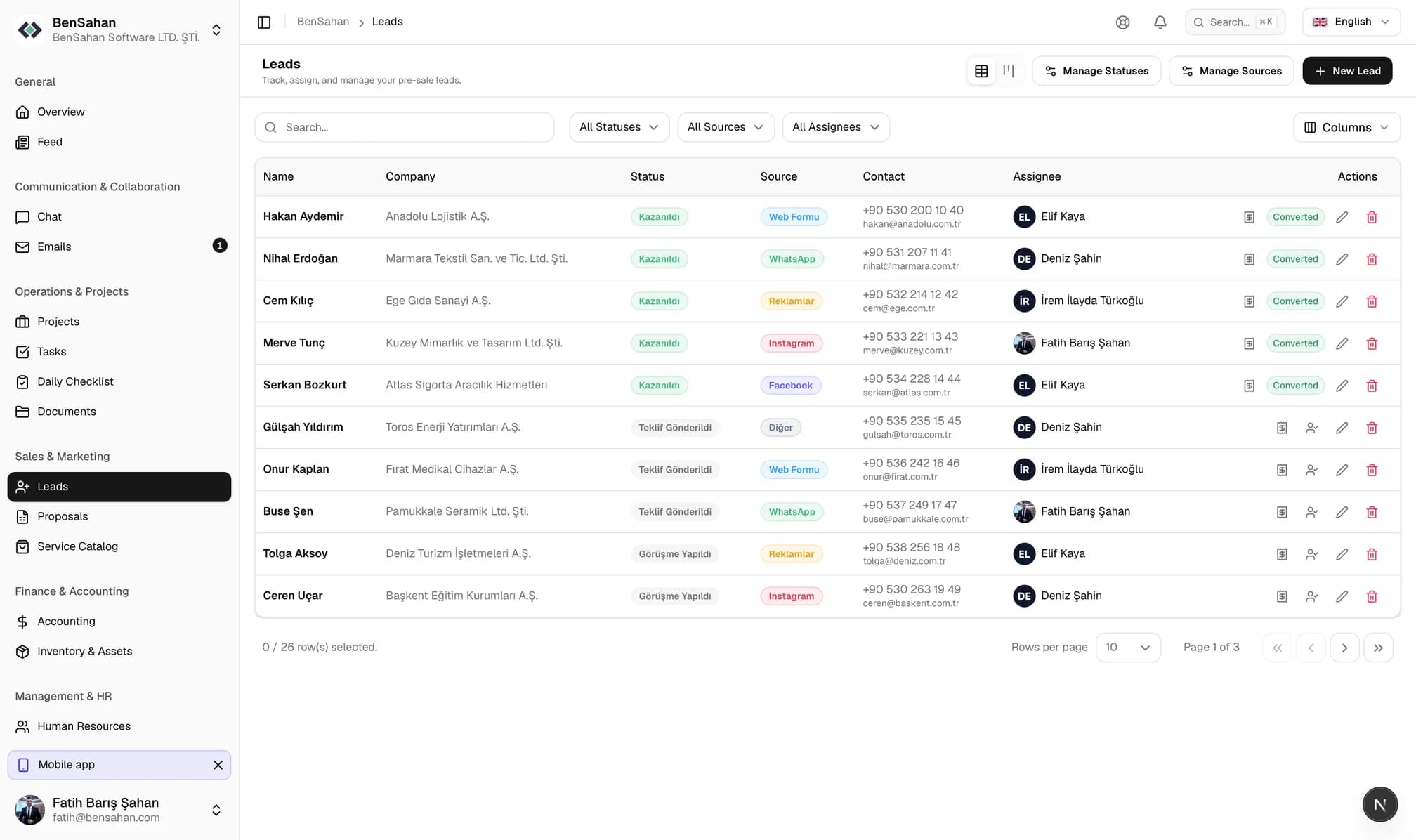
Capture the lead, see where it sits in the pipeline, build the quote from your catalogue and email it as a PDF. By the time it is approved, the customer, the account and the invoice already exist.
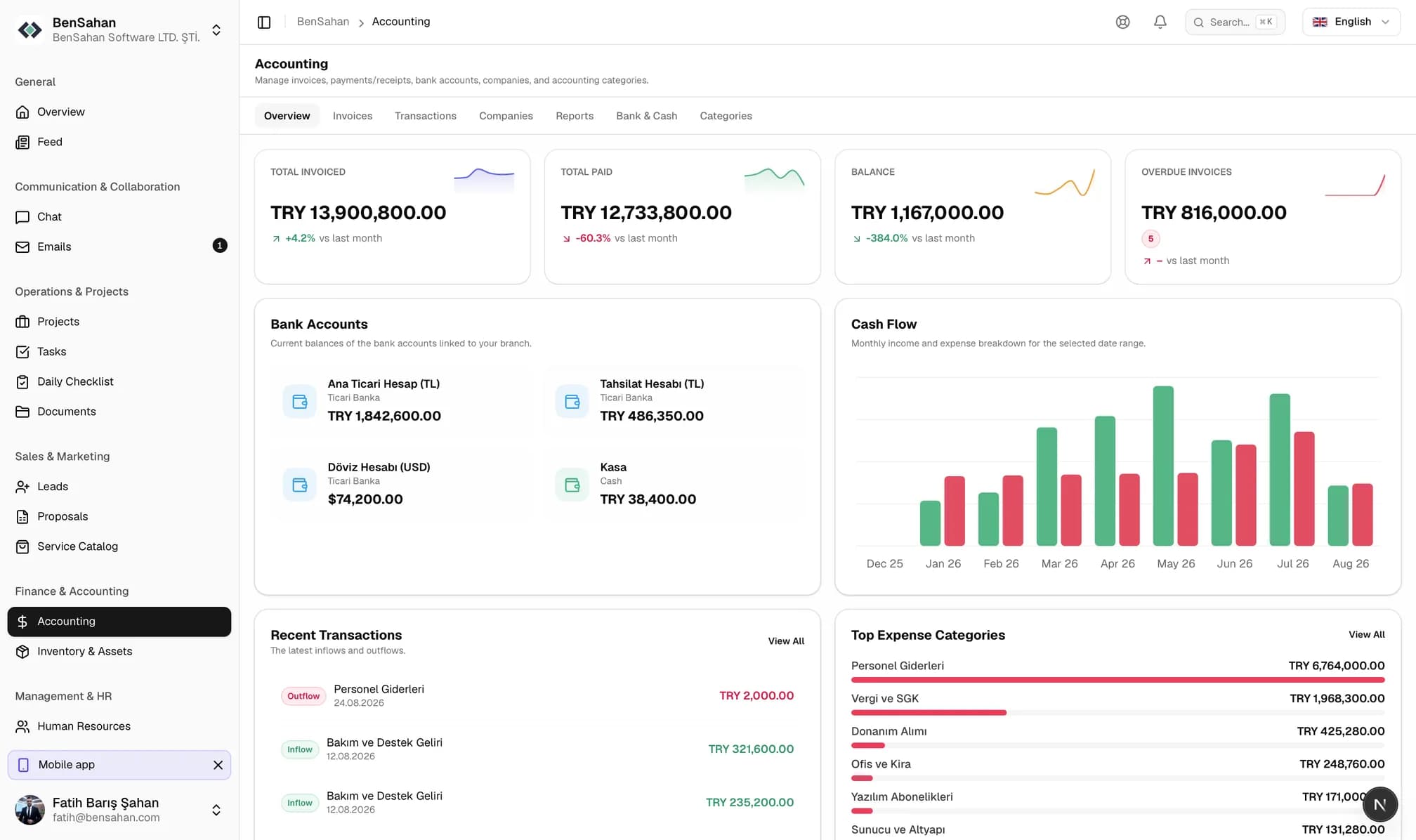
Income and expenses, customer accounts, bank accounts and invoices in one place. Tax breakdowns by rate, instalment collection and a cash-flow report come as standard.
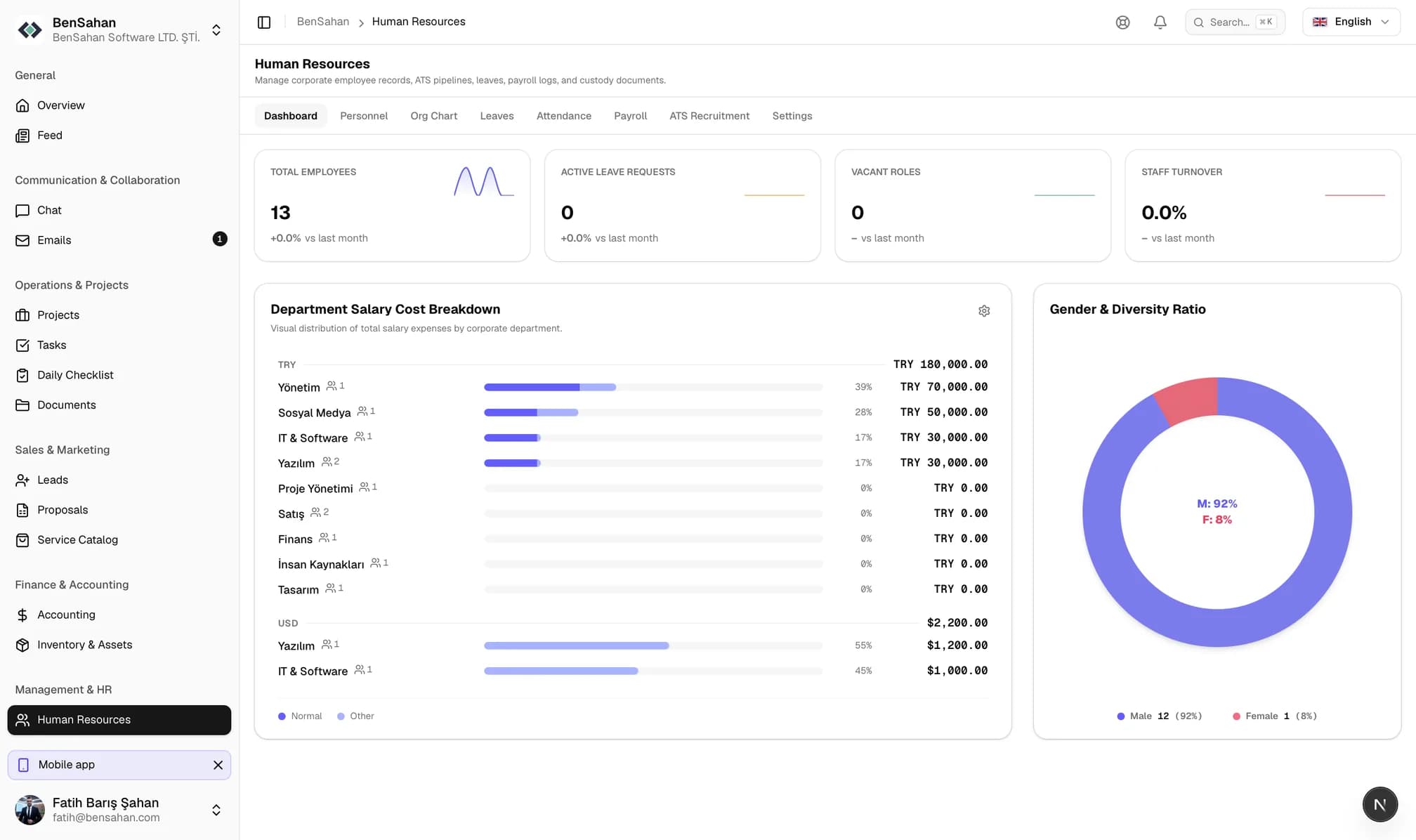
From employee records and the org chart to clock-in and the leave approval chain. A leave request moves from the manager to HR on its own.
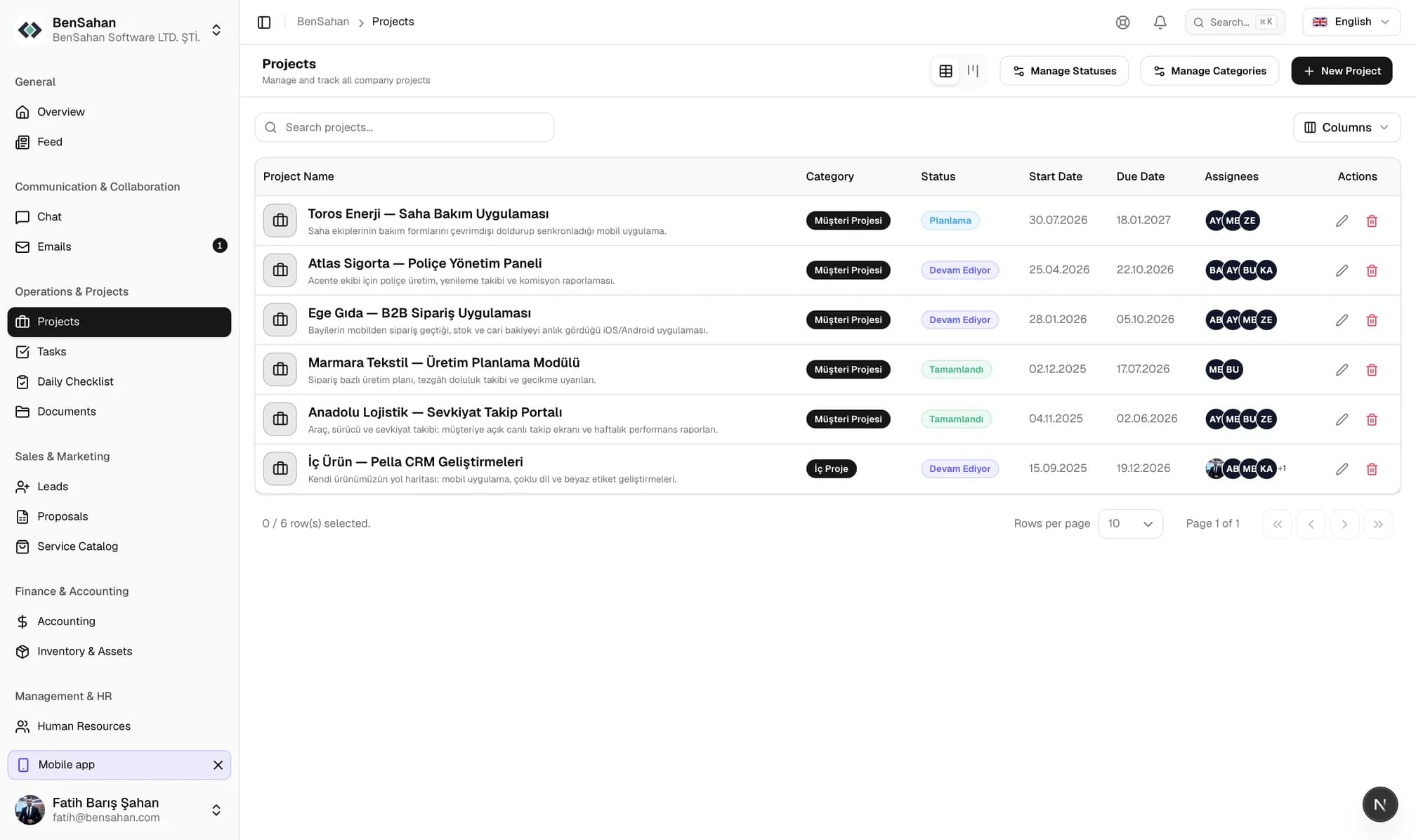
Open the project, add the team, hand out the tasks. Recurring daily work turns into checklists that generate themselves, and anything left undone shows up as a badge.
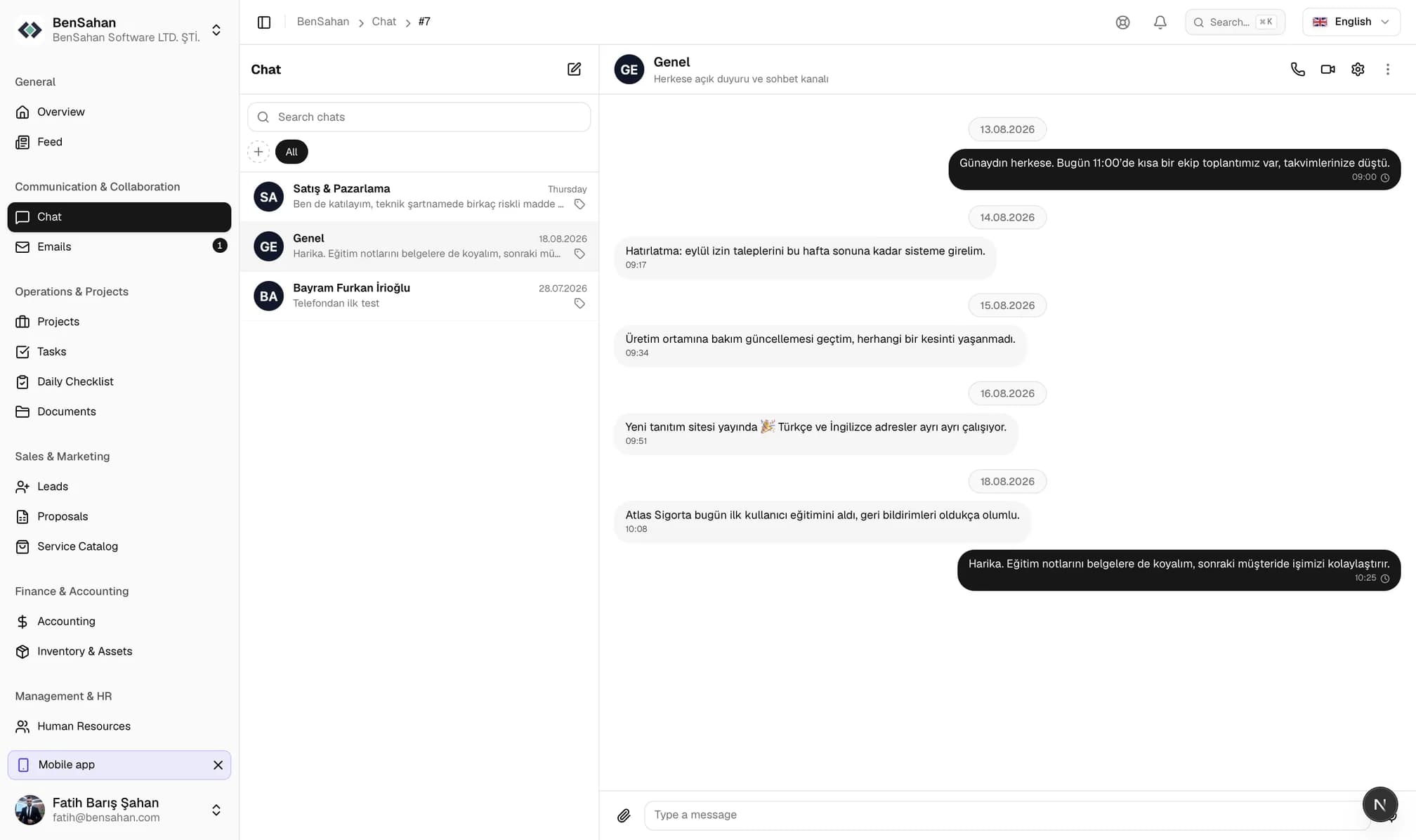
Team communication lives where the work happens. Move from a message to a video call, post an announcement to the company feed, and keep the customer thread on the same screen.
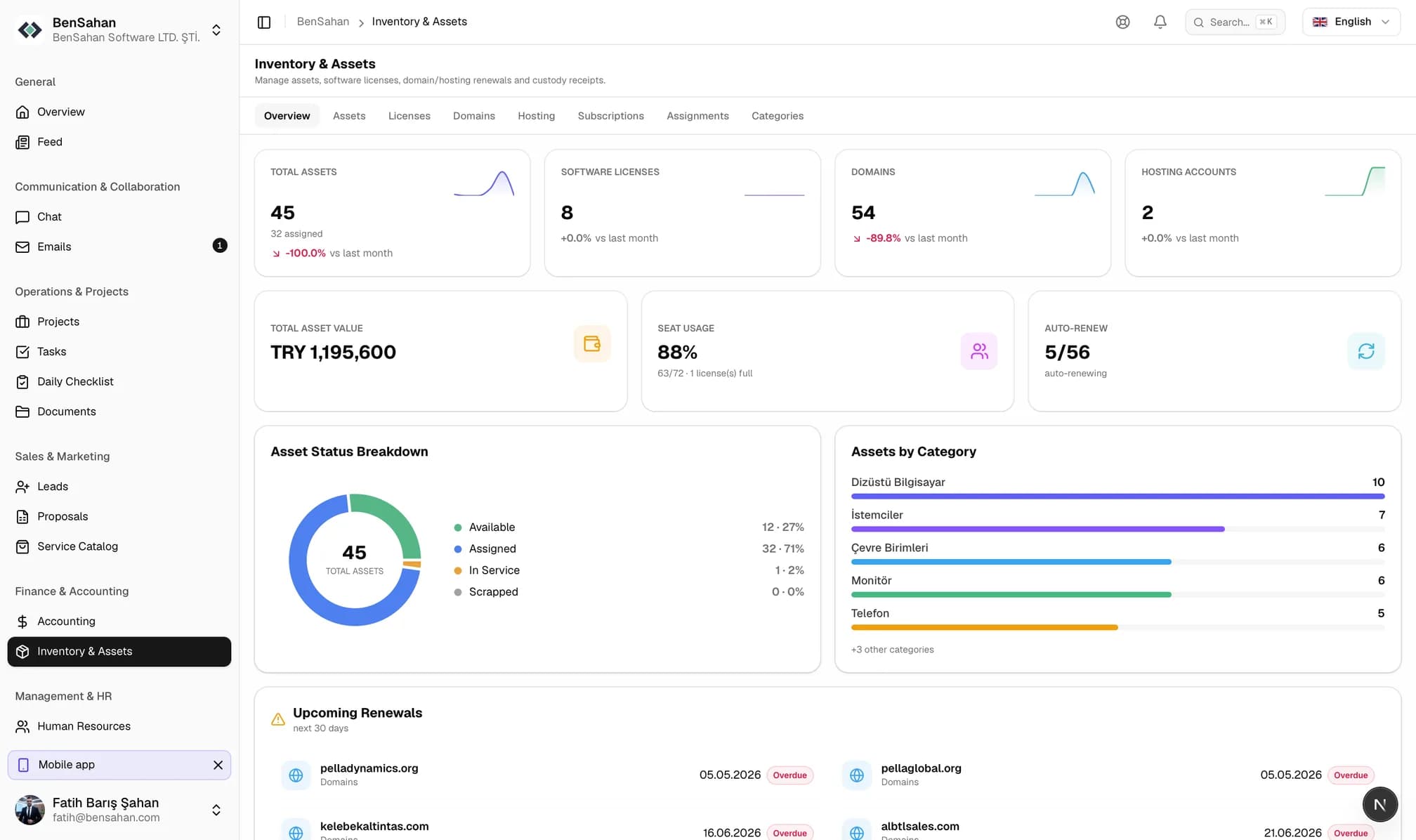
Every company asset on the record: who has which laptop, how many seats a licence has left, when a domain expires and where a contract is filed.
Whatever you do in a module goes through the same permission, notification, search and audit layer.
Cmd/Ctrl + K searches customers, quotes, invoices, documents and people from one box.
Task assignments, mentions, leave approvals and invoice due dates reach both the browser and the phone.
2FA, session management and remote sign-out are available on every account.
Statuses, currency, working hours and holidays are not fixed lists — each branch defines its own.
Quotes, handover receipts and invoices are produced from a corporate template.
Who changed what and when is recorded, and document versions can be rolled back.
A websocket layer delivers messages, notifications and status changes without a page refresh.
Upgrade your plan and manage cards from inside the panel; card details never touch our servers.
In a business CRM the real question is not the feature list — it is how permissions actually work.
A record hidden in the interface is rejected by the API as well. The rule is defined once and both clients read the same one.
Start from the built-in roles, then define your own per module and per action.
Accept clock-ins only from the branch location or from an allow-listed IP address.
Two-factor authentication, an open-session list and remote sign-out come as standard.
Every customer runs in its own tenant space; queries are scoped to the tenant and branch context.
On white-label plans you connect your own domain and the certificate is issued automatically.
In a 30-minute live demo we walk through your own processes inside Pella. No sign-up, no commitment.